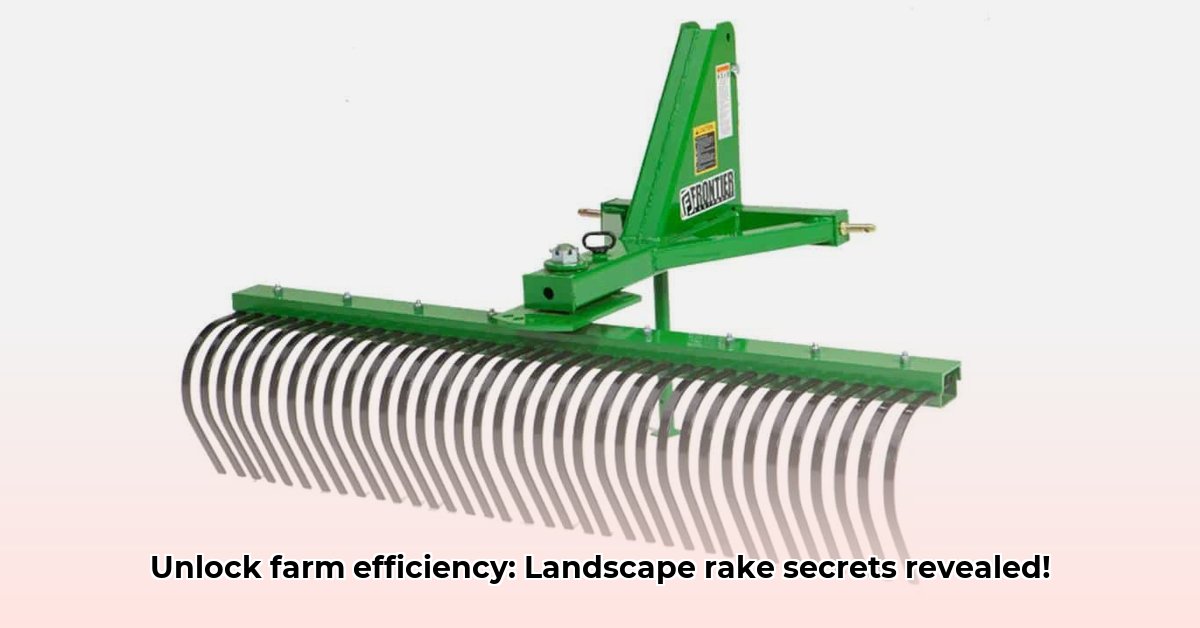
Landscape Rake Tines Tractor Supply: Your Guide to Efficient Land Management
Choosing the right tractor-mounted landscape rake can dramatically improve your farm's efficiency and sustainability. This guide provides a practical framework for selecting, operating, and maintaining these valuable tools, helping you make informed decisions to optimize your land management practices. For more detailed information on choosing a landscape rake, check out this helpful resource: Landscape Rake Guide.
Understanding Your Needs: Selecting the Perfect Landscape Rake
Before exploring specific models, assess your farm's unique requirements. Farm size significantly impacts rake selection; smaller plots may only need a smaller, potentially manual, rake, while large farms benefit from larger, more powerful models to save considerable time and labor. Soil type is another critical factor. Heavy clay soil demands more robust tines than sandy loam. Budget constraints influence the buy-versus-rent decision. Finally, consider primary tasks: seedbed preparation, land leveling, or debris removal—each influencing tine type and spacing.
Here's a checklist to guide your decision-making:
- Farm size: (Small, medium, or large acreage?)
- Soil type: (Clay, sandy loam, silt, or other?)
- Budget: (Purchase or rental?)
- Primary tasks: (Seedbed preparation, leveling, debris removal, or a combination?)
Exploring Landscape Rake Options at Your Tractor Supply Store
Your local Tractor Supply (or similar retailer) offers various landscape rakes. Key distinctions include tine type (fixed or adjustable) and spacing. Fixed tines, generally simpler and less expensive, excel at repetitive tasks. Adjustable tines provide flexibility for diverse terrains and tasks. Tine spacing influences application; wider spacing suits large debris removal, while closer spacing is better for finer work. Material selection also varies; steel tines offer durability but increased weight, while lighter materials offer ease of use but reduced longevity. Carefully consider these factors based on your needs and budget. Don't forget to consider features like adjustable rake angles for versatile applications.
Using Your Landscape Rake Effectively: Operation and Maintenance
While landscape rake operation is generally straightforward, prioritizing safety is paramount. Always consult the manufacturer's instructions.
Step-by-Step Operation:
- Secure Attachment: Carefully attach the rake to your tractor's three-point hitch, ensuring a firm and correct connection.
- Depth Adjustment: Adjust tines to the desired depth, starting shallow and progressively increasing as needed.
- Engage the PTO: Engage the power take-off (PTO) slowly and smoothly, avoiding sudden movements.
- Overlapping Passes: Slightly overlap passes for complete coverage; this avoids missed spots.
- Regular Inspection: Regularly inspect tines for wear and tear or damage; this is crucial for safety and efficiency.
Essential Maintenance:
- Lubricate Moving Parts: Regularly lubricate moving parts to maintain smooth operation and extend equipment lifespan.
- Post-Use Inspection: Inspect tines for damage after each use. Addressing minor issues prevents larger problems.
- Avoid Overloading: Prevent overloading the rake to avoid equipment damage and potential injury.
- Proper Storage: Store the rake properly when not in use to prevent rust and corrosion.
Sustainable Farming with Landscape Rakes: Environmental Impact
Landscape rakes are integral to sustainable agriculture. Reduced tillage, a key sustainable practice, is significantly enabled by landscape rakes. Minimizing soil disturbance reduces erosion and preserves soil structure, leading to improved water retention and nutrient cycling. Lower fuel consumption compared to plowing further enhances the environmental benefits.
Cost-Benefit Analysis: Is a Landscape Rake Right for Your Farm?
A thorough cost-benefit analysis is necessary.
| Factor | Costs | Benefits |
|---|---|---|
| Initial Investment (Purchase/Rental) | Varies greatly depending on size and features. | Significant time and labor savings; healthier soil; potential yield improvements. |
| Ongoing Maintenance | Regular lubrication and occasional tine replacement. | Maintains equipment functionality and extends its operational lifespan. |
| Fuel Usage | Generally lower than alternative methods like plowing. | Additional cost savings, particularly noticeable on larger areas. |
Weigh the initial investment against long-term gains—reduced labor costs, time savings, and potential yield enhancements. Many farmers find the long-term environmental and economic advantages significantly outweigh the initial expense.
How to Minimize Soil Compaction Using Tractor Mounted Landscape Rakes
Key Takeaways:
- Properly used landscape rakes are essential tools for minimizing soil compaction.
- Rake selection depends on soil type, farm size, and budget.
- Proper operation and maintenance are critical for longevity and effectiveness.
- Landscape rakes significantly enhance sustainable farming practices, such as reduced tillage.
- A comprehensive cost-benefit analysis validates the investment in a landscape rake.
Understanding Landscape Rakes and Soil Compaction
Soil compaction negatively impacts farm productivity. Heavy machinery and repeated tillage degrade soil structure, hindering water infiltration and root growth. This, in turn, reduces yields and increases erosion. Landscape rakes offer a solution by providing efficient land leveling, debris removal, and soil aeration while minimizing intensive tillage. They represent a gentler approach to land preparation.
Selecting the Right Landscape Rake
Carefully consider these factors when choosing a landscape rake:
- Farm Size and Soil Type: Smaller farms might require a lighter, narrower rake, while larger operations benefit from wider models. Clay soils necessitate different tines than sandy soils.
- Budget: Rakes vary significantly in price based on size, features, and durability.
- Typical Tasks: Land leveling, seedbed preparation, or debris removal—this dictates tine style and rake design.
| Feature | Considerations |
|---|---|
| Rake Width | Align with your tractor's capacity and field size. |
| Tine Spacing | Closer spacing for finer work; wider spacing for rougher terrain. |
| Tine Material | Steel for durability; spring steel for flexibility. |
| Rake Angle Adjustment | Allows for versatile use and adaptation to different tasks |
Operating Your Landscape Rake Effectively
Follow these steps for optimal performance and soil compaction minimization:
- Pre-Operation Inspection: Inspect tines for damage, ensure secure attachment to your tractor, and verify hydraulic functionality.
- Rake Adjustment: Set tine angle and depth according to soil conditions and intended task. Begin with shallow depth and adjust gradually.
- Safe Operation: Maintain a consistent speed; avoid sudden stops or turns. Observe your surroundings for obstacles.
- Post-Operation Maintenance: Clean the rake after each use, inspect tines, and lubricate moving parts.
Sustainable Practices with Landscape Rakes
Landscape rakes promote sustainable farming practices. Reduced tillage minimizes soil disturbance, preserving soil structure and organic matter. Improved drainage reduces irrigation needs, conserving water resources. Less compaction results in healthier roots and improved crop yields, benefiting both the environment and your bottom line.
Cost-Benefit Analysis
While the initial investment is substantial, consider these long-term benefits:
- Reduced Labor Costs: Significant reduction in manual labor.
- Increased Efficiency: Faster land preparation allows more time for other crucial tasks.
- Improved Yields: Healthier soil leads to better crop growth and increased profits.
Weigh these advantages against the purchase or rental cost. The long-term return on investment is usually considerable.